5th Dec, 2025
The Business Case for Professional Cross-Border Freight
In a global trade environment driven by precision and performance, knowing where your cargo is, and in what condition, is no longer optional. It’s essential. Today’s logistics clients expect more than delivery confirmations; they demand real-time visibility across every stage of the supply chain.
At BAC Logistics, we deliver exactly that. Through integrated tracking technology, digital reporting, and transparent communication, we give clients full control over their freight - from bonded warehouse to final destination. This level of visibility doesn’t just improve convenience; it drives operational efficiency, compliance, and trust.
The logistics industry has evolved far beyond basic shipment updates. End-to-end freight visibility refers to continuous tracking and data monitoring across every stage of the shipping journey - including warehousing, customs clearance, transit, and delivery.
It provides a unified, real-time view of cargo location, condition, and movement. For global supply chains, this visibility allows for faster decisions, proactive issue resolution, and measurable accountability.
In modern logistics, visibility is not just a feature - it’s the foundation of reliability.
Every consignment, especially high-value or time-sensitive cargo, carries risk. Without proper tracking, businesses face:
Uncertainty in delivery timelines
Difficulty tracing delays or damages
Lack of transparency for insurance or compliance purposes
Reduced customer confidence
End-to-end tracking mitigates these risks by offering constant access to shipment data. Clients no longer have to wait for updates; they can see the entire process unfold in real time.
For companies trading across multiple African borders, this visibility also simplifies coordination between customs, carriers, and warehouses, reducing administrative strain and preventing costly miscommunication.
At BAC Logistics, freight visibility begins the moment goods enter our system and continues until they reach their destination. Our tracking solutions combine digital systems, secure communication protocols, and human oversight to maintain control, compliance, and confidence.
Each shipment is logged into a centralised digital system that connects warehouse operations, customs documentation, and transport partners. This ensures that updates flow seamlessly between every stakeholder.
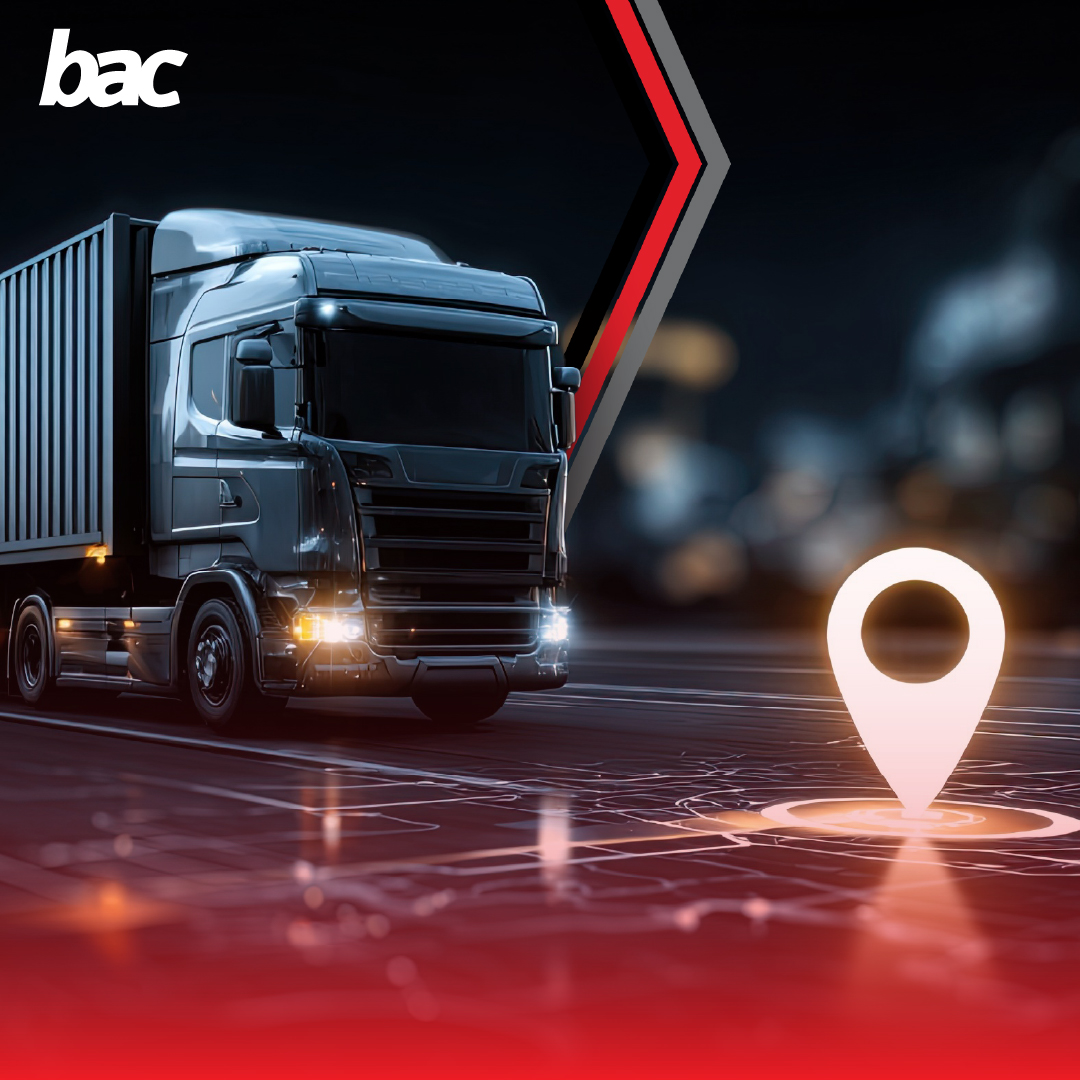
All BAC vehicles are equipped with GPS tracking and geofencing alerts, providing real-time location data. If a vehicle deviates from its planned route or stops unexpectedly, an alert is immediately triggered in our control centre.
Every handover point - from driver to warehouse, from border to border - is digitally recorded. This creates a transparent audit trail for both internal and external compliance requirements.
Clients gain access to secure online dashboards displaying live shipment progress, estimated arrival times, and proof of delivery records.
This combination of technology and process means BAC’s tracking isn’t just visual, it’s verifiable.
Visibility is the backbone of cargo security. The ability to track a shipment in real time deters theft, tampering, and route diversion. For high-value consignments such as aircraft engines, precision machinery, or electronic components, tracking becomes an active layer of protection.
Tamper-evident seals and smart locks
Geo-restricted route planning
24/7 monitoring by a central control team
Incident escalation protocols in case of anomalies
By combining physical and digital safeguards, BAC maintains both security and accountability throughout every movement.
Tracking systems do more than report positions - they generate valuable operational data. When analysed, this data provides insights into route efficiency, customs clearance times, and delay patterns.
BAC Logistics uses these insights to:
Optimise delivery routes
Identify potential bottlenecks in customs processes
Enhance resource planning for clients with recurring shipments
Strengthen compliance records for audit and insurance purposes
Over time, this data becomes a powerful tool for predictive logistics, helping clients forecast delivery times and plan production schedules more accurately.
Modern logistics often involves multi-modal shipping, combining air, sea, and road freight. Without integrated visibility, coordination between these legs can become fragmented.
BAC’s tracking infrastructure ensures continuity between modes - meaning a container tracked on a vessel remains visible when transferred to road or air. This single-system visibility avoids data gaps and gives clients a true door-to-door view of their freight journey.
Tracking systems aren’t only for operational convenience, they play a vital role in regulatory compliance. Many African customs authorities now require accurate transit data for cargo moving under bond or through regional corridors such as SADC and COMESA.
BAC’s real-time tracking aligns with these requirements by providing timestamped data for each border crossing, ensuring full adherence to route and clearance regulations.
This reduces the risk of penalties, lost goods, or licence issues and strengthens BAC’s reputation as a trusted trade partner.
Freight visibility extends beyond data. It’s about communication that builds trust. At BAC Logistics, clients receive proactive status updates, exception alerts, and delivery confirmations without having to request them.
This transparent communication model fosters long-term relationships and ensures clients always know what’s happening, where it’s happening, and when it will be delivered.
The next decade of logistics will be defined by smart data. Innovations such as Internet of Things (IoT) sensors, blockchain verification, and AI-driven route optimisation will further enhance tracking precision and security.
BAC Logistics continues to invest in these technologies, ensuring our systems evolve alongside client expectations. Our goal is simple: complete visibility, zero uncertainty.
For businesses trading regionally or globally, the impact of full tracking visibility is measurable:
Reduced risk and insurance claims through verifiable data trails
Improved customer confidence due to transparent reporting
Faster customs processing supported by validated transit logs
Better supply chain planning through real-time information
Enhanced accountability across all logistics partners
By turning freight visibility into an operational standard, BAC empowers clients to make logistics a competitive advantage, not a risk factor.
In modern logistics, visibility is the difference between reaction and control. Businesses that can see every stage of their freight journey gain agility, efficiency, and confidence in their operations.
At BAC Logistics, we combine technology, compliance expertise, and regional experience to deliver true end-to-end visibility. From bonded warehouses and customs pre-clearance to live vehicle tracking and final delivery, every movement is measured, monitored, and managed.
Because in logistics, what you can see - you can secure. And with BAC Logistics, your cargo is never out of sight.
We pride ourselves on being the only logistics, transport and retail services business that attends to customers' needs with a complete, end-to-end solution.
Reach out to us through the contact form and we'll get back to you within 24 hours.
Copyright © . BAC Logistics. All rights reserved.