1st Apr, 2026
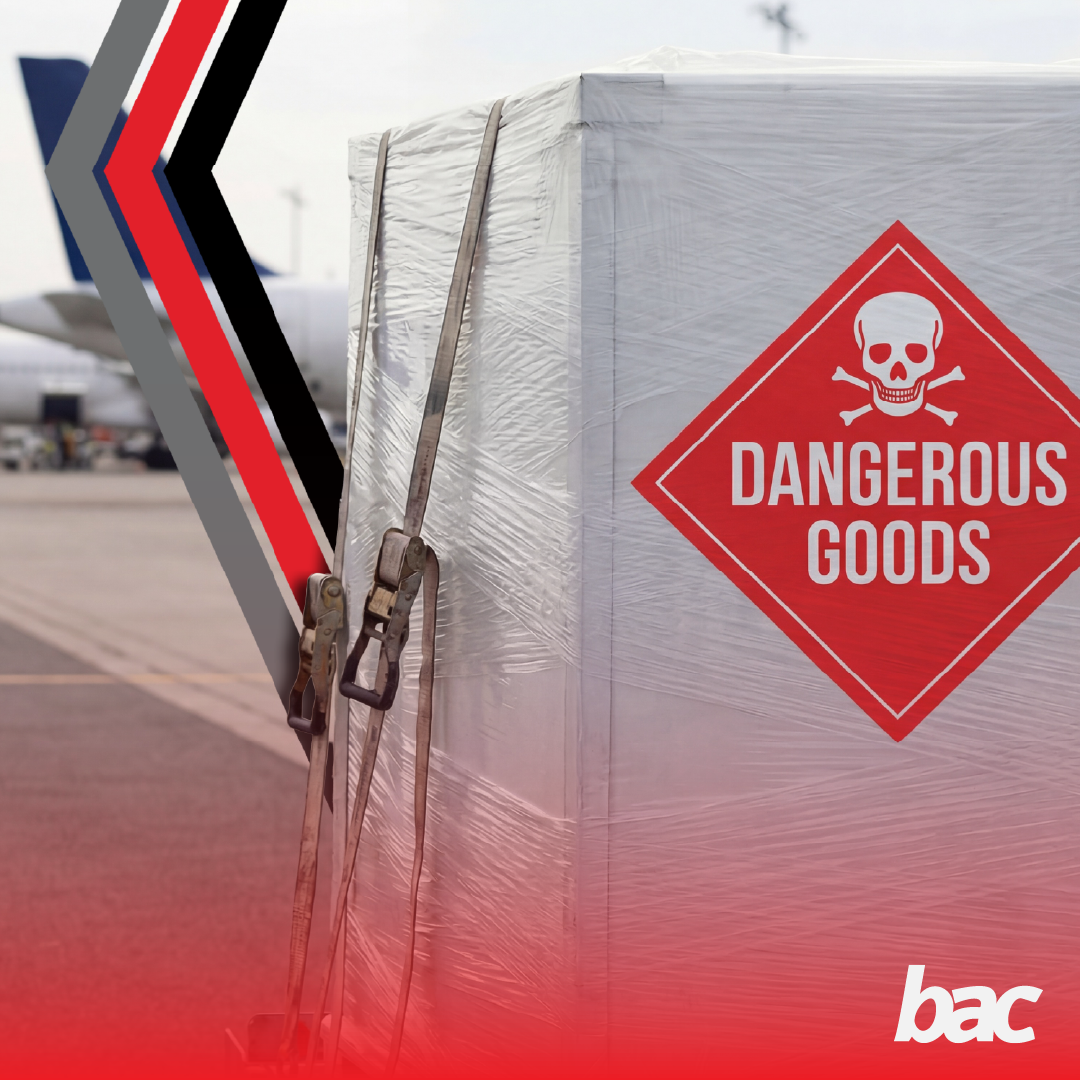
Dangerous Goods transport does not fail at the border.
It fails in the structure behind the shipment.
In Southern Africa’s regulated trade environment, Dangerous Goods are governed by international codes, national legislation, and enforcement systems that leave little tolerance for inconsistency. Classification errors, packaging mismatches, incomplete documentation, or poorly aligned release planning do not simply cause delays; they trigger scrutiny.
At BAC Logistics, we operate in this environment every day. Dangerous Goods are not treated as an extension of general freight. They are managed within a compliance-led structure designed specifically for regulated trade.
Once cargo is classified as Dangerous Goods, it enters a regulatory framework shaped by:
UN Model Regulations
ICAO and IATA Dangerous Goods Regulations (air freight)
IMDG Code (sea freight)
National Hazchem legislation governing road transport
These frameworks control how goods are:
Classified
Packaged
Labelled
Documented
Segregated
Declared
Compliance cannot be adjusted mid-route. It must be correct before movement begins.
We routinely manage lithium batteries, industrial chemicals, hazardous liquids, and other regulated consignments across South Africa and SADC corridors. Each shipment must withstand scrutiny at airports, ports, inland inspections, and border posts.
Dangerous Goods do not tolerate reactive compliance.
Across SADC trade routes, we see a common pattern: compliance is completed too late.
Typical exposure points include:
Incorrect UN classifications
SDS is misaligned with shipping descriptions
Packaging not matched to declared packing groups
Documentation inconsistencies between commercial and transport records
Permit confirmation initiated after dispatch scheduling
These are not dramatic failures. They are structural gaps.
By the time cargo reaches a control point, correction options narrow, and costs escalate.
At BAC Logistics, classification validation, documentation reconciliation, packaging confirmation, and permit verification are embedded upstream in our operational workflow. Clearing, transport, and warehousing functions operate within one coordinated structure, not as disconnected handovers.
Preparation is built into our process.
Dangerous Goods governance requires infrastructure, not just knowledge.
We operate a Hazchem-certified fleet across South Africa and into Botswana, Zambia, and Zimbabwe, including 1–34 ton super link configurations. Movements are supported by:
Certified Hazchem drivers
Route and risk assessments
Segregation planning
Continuous GPS monitoring
Structured cross-border coordination
Hazchem transport increases regulatory visibility. Our structure is designed to operate confidently within that scrutiny.
This is particularly important across SADC corridors, where inspection frequency and congestion patterns shift. Movement without release readiness creates exposure. Alignment before dispatch protects continuity.
When Dangerous Goods move under bond, regulatory discipline intensifies.
Bond registers must reconcile accurately. Stock movement must align with Customs declarations. Release sequencing must remain controlled and auditable.
BAC Logistics operates bonded facilities under Customs & Excise governance, including our operations linked to OR Tambo International Airport, where we are a major administrator for duty-free terminal bond stores, as well as warehousing capabilities in Lobatse, Lusaka, Harare, and Bulawayo.
Because our clearing, bonded warehousing, and transport functions operate within one integrated compliance architecture, documentation and execution remain aligned across the supply chain.
Fragmentation creates exposure. Integration reduces it.
BAC Logistics holds SARS Authorised Economic Operator (AEO) Level 1 and Level 2 accreditation.
AEO status reflects structured alignment with recognised Customs security and compliance standards, including:
Mature document control systems
Traceable operational workflows
Integrated risk management
Security governance across modes
In Dangerous Goods logistics, this maturity matters. It supports release predictability, audit readiness, and operational stability.
Compliance is not a department within our operation. It is the framework our operation runs on.
Dangerous Goods transport is unforgiving. It exposes structural weakness quickly and at a cost.
In Southern Africa’s regulated trade environment, safe and predictable movement depends on disciplined classification, aligned documentation, certified Hazchem execution, bonded oversight, and integrated clearing built to operate under scrutiny.
At BAC Logistics, this is not an added capability. It is how we are structured to operate, across OR Tambo bonded facilities, SADC trade corridors, Hazchem-certified fleet movements, and AEO-accredited governance systems.
When compliance discipline determines continuity, the choice of logistics partner is decisive.
Partner with BAC Logistics to move your Dangerous Goods within a structure built for regulated trade and built to withstand scrutiny.
We pride ourselves on being the only logistics, transport and retail services business that attends to customers' needs with a complete, end-to-end solution.
Reach out to us through the contact form and we'll get back to you within 24 hours.
Copyright © . BAC Logistics. All rights reserved.